Emergency HVAC Service in Largo, FL
In Florida, a broken AC isn’t just uncomfortable. It can be a safety issue. Indoor heat can get dangerous fast for babies, older family members, pets, and anyone with health conditions. And a closed-up house with no AC starts holding onto humidity, which brings its own problems if it drags on. That’s why we never treat “my AC quit” like a routine ticket.
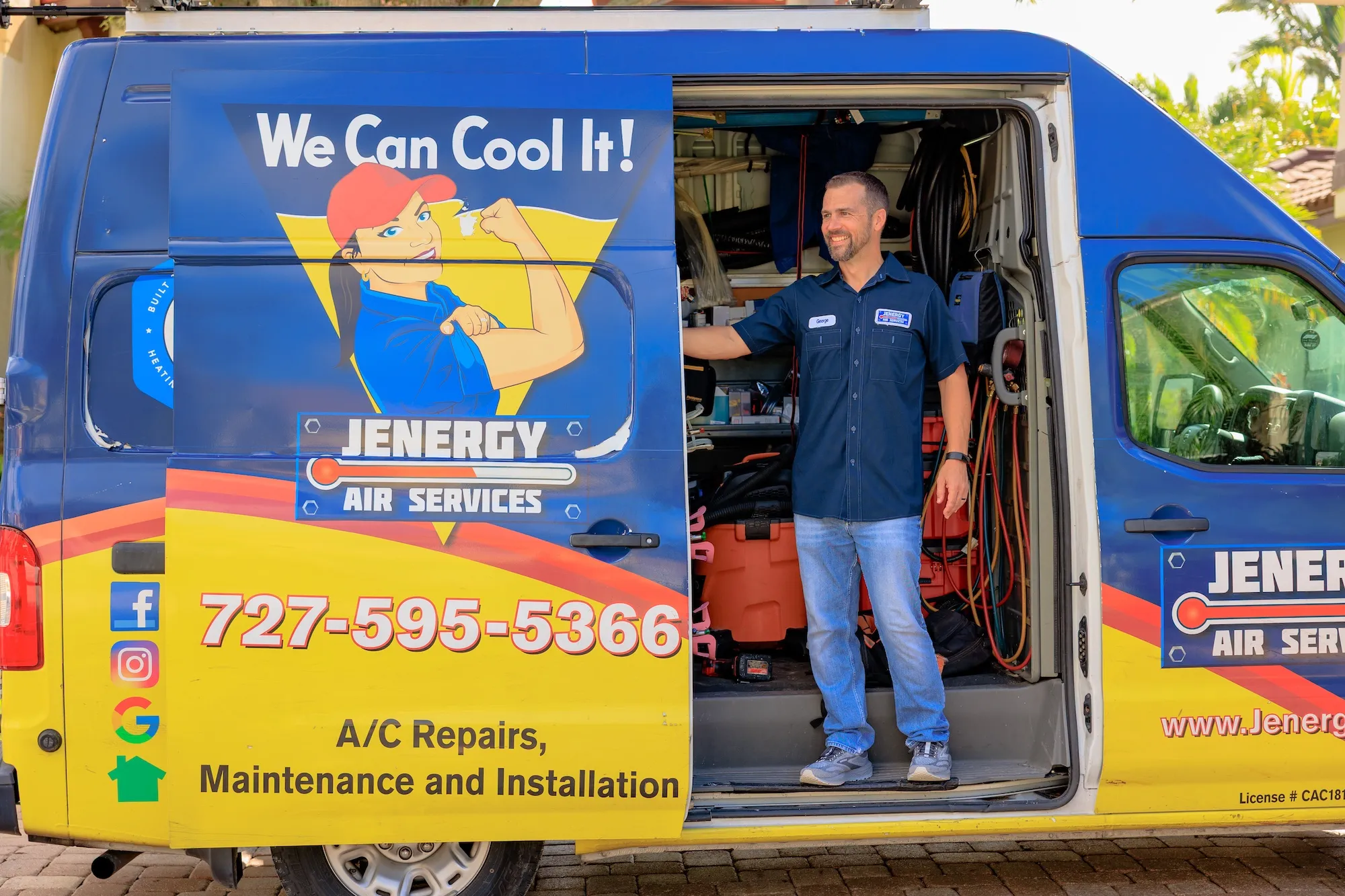
Call Jenergy Air Services® any time. On weekdays, calls that come in before 5 p.m. can often get a technician out the same day, depending on the schedule. After hours, on weekends, and on holidays, a live answering service takes your message, so you’re never stuck talking to a voicemail box. Our team gets every message first thing the next morning and reaches out to get you scheduled. When our tech arrives, they’ll do what we’ve always done: attempt to fix it first before anyone says the word “replacement.” That’s how we’ve earned the trust of homeowners from Seminole to Belleair since 2015.
What to Check Before You Call for Emergency AC Repair
Some “emergencies” turn out to be five-minute fixes, and we’d honestly rather you save the money. Before you call, run through these:
Some situations can’t wait, though. If you smell burning or anything electrical, see smoke, or the breaker trips again after you reset it, turn the system off and call us right away. Do the same if water is pouring from the indoor unit or staining your ceiling. And if you ever smell gas near a gas furnace, leave the house and call your gas company or 911 from outside.
The Heating and Cooling Emergencies We See Most
Most emergency calls trace back to a handful of culprits, and a few of them are uniquely Florida.
Florida gets more lightning than almost anywhere in the country, and power surges can fry the control boards and electrical parts inside your system. If your AC won’t start after a storm, that’s likely why.
When your condensate drain line clogs with algae, a safety switch shuts the system down to keep water from overflowing into your home. It can look like a total failure, but it’s often one of the quicker fixes we make.
A dirty filter, low refrigerant, or poor airflow can freeze the coil inside your system, leaving it blowing warm air or nothing at all. Turn the cooling off and switch the fan to “On” to start thawing it out. Don’t chip at the ice, however, as that can damage the coil.
Our Most Popular Crisis Mode FAQs
If there’s no cooling during a heat wave and someone in your home is very young, older, pregnant, or has a health condition, that’s an emergency. So is a burning or electrical smell, water leaking into your home, a breaker that keeps tripping, or no heat during a cold snap.
On the flip side, a single warm room or a new noise without other symptoms can usually wait for a regular appointment.
No, and we’d rather be upfront about that than promise a midnight visit we can’t make. Our techs are dispatched during business hours, and weekday calls that come in before 5 p.m. have the best shot at same-day service. If you call after hours, your message will be waiting for us in the morning, and you’ll be first in line.
Close the blinds, especially on sunny windows, and run your ceiling fans. Skip the oven, dryer, and dishwasher, since they all add heat. Stay hydrated, and take a cool shower if you need relief. If anyone in your home is especially sensitive to heat, consider heading somewhere air-conditioned, like a friend’s house, a library, or a mall, until your system’s back up and running.
Your name, address, and phone number, plus a quick description of what your system is doing. Is it blowing warm air, making a noise, leaking, or not turning on at all? If you know the brand and roughly how old your system is, that helps too. Snap a photo of the label on your outdoor unit, and you’ll have the model and serial number handy (though that isn’t required). The more we know upfront, the better prepared our techs will be.
When the power goes out, switch your HVAC system off at the thermostat, and if you can do it safely, at the breaker, too. That protects it from the power surge that can hit when electricity comes back on. Once power is restored, wait a few minutes before turning it back on. If your outdoor unit was underwater or hit by debris, don’t turn it on at all. Call us first, so that we can check it safely.
Crisis Handled and Comfort Restored
Whatever your heating and cooling system just did, we’ve seen it before, and we know how to fix it. The Jenergy team is here to restore your comfort level as quickly as possible when an HVAC emergency strikes.