
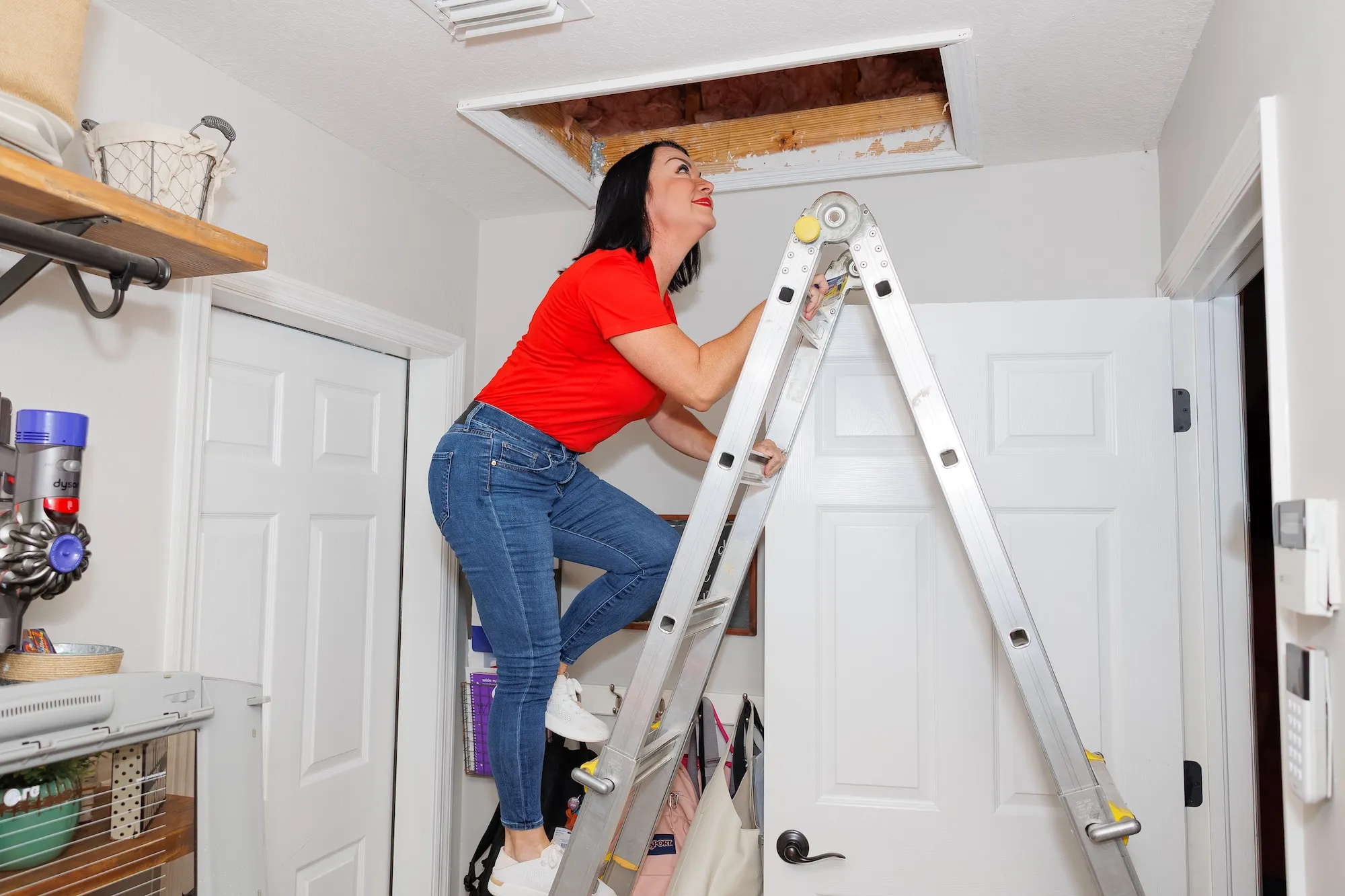
Air Duct Repair in Largo, FL That Gets Every Room Back in the Game
Your ductwork has more say in how your house feels than the HVAC unit itself. Hook a top-of-the-line system up to leaky, crushed, or undersized ducts, and it’ll run like it’s wearing ankle weights. And in plenty of Pinellas homes, those ducts haven’t been touched since the early 1970s.
Jenergy Air Services® finds out exactly what’s going wrong up there, whether it’s leaks, disconnected joints, crushed runs, rodent damage, or ductwork that was never sized right to begin with. Then we fix it, so the air your system works so hard to make actually lands in your rooms. We’ve been crawling through Pinellas County attics since 2015, and yes, we’ll do it in August.
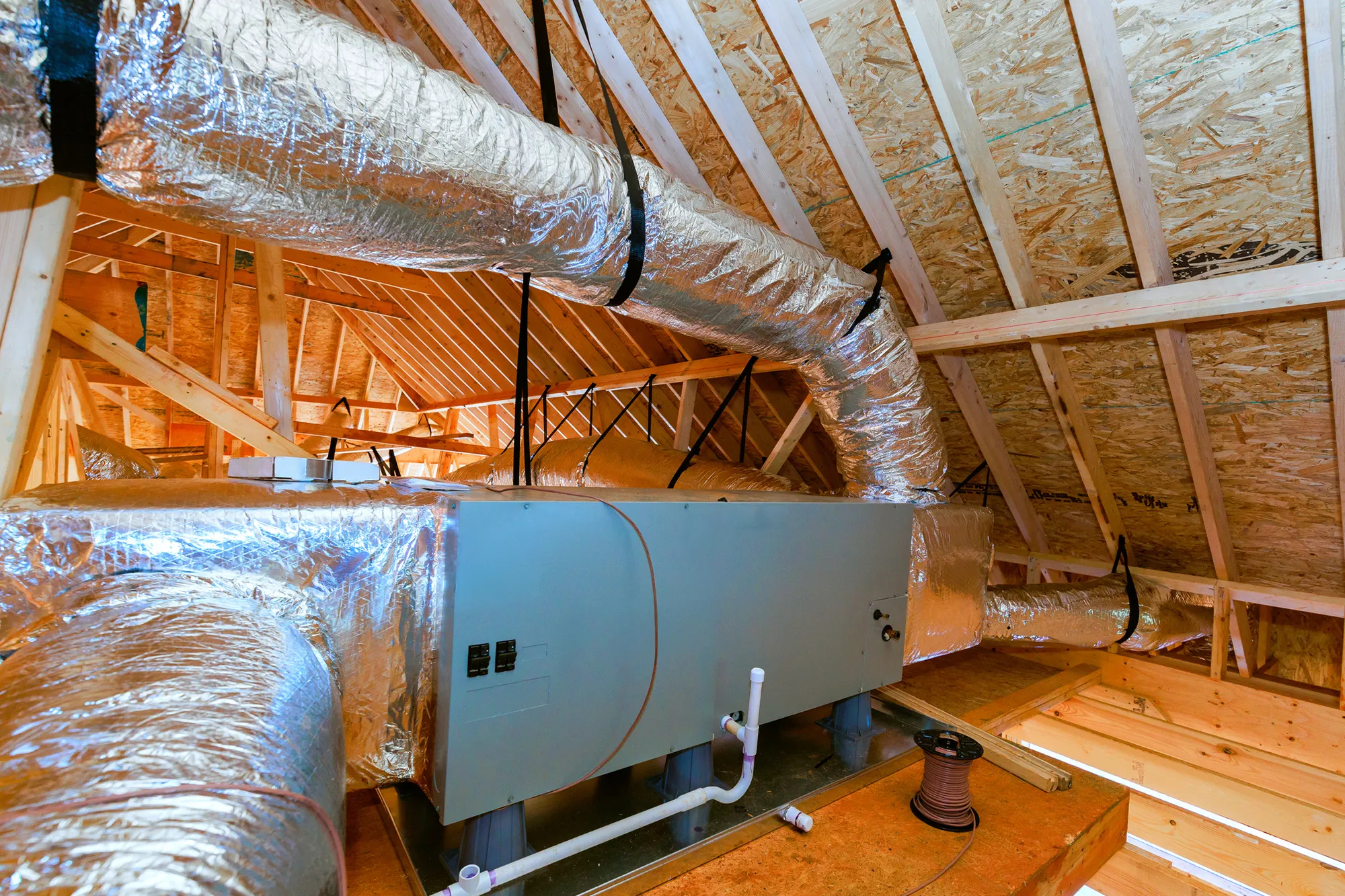
Signs Your Ducts Need to be Repaired
Most Largo homeowners treat leaky duct symptoms one at a time. They buy an air purifier for the dust, a box fan for the hot bedroom, and a smart thermostat for the high bill, then wonder why nothing’s working. If you’re noticing more than one of these, your ducts are probably the common thread.
Not all leaks are created equal. A leak on the supply side dumps your cold air into the attic before it ever reaches you. A leak on the return side is worse. It pulls hot, dusty, humid attic air straight into your system, so your AC ends up cooling the attic air too, and you end up breathing whatever’s been floating around up there.
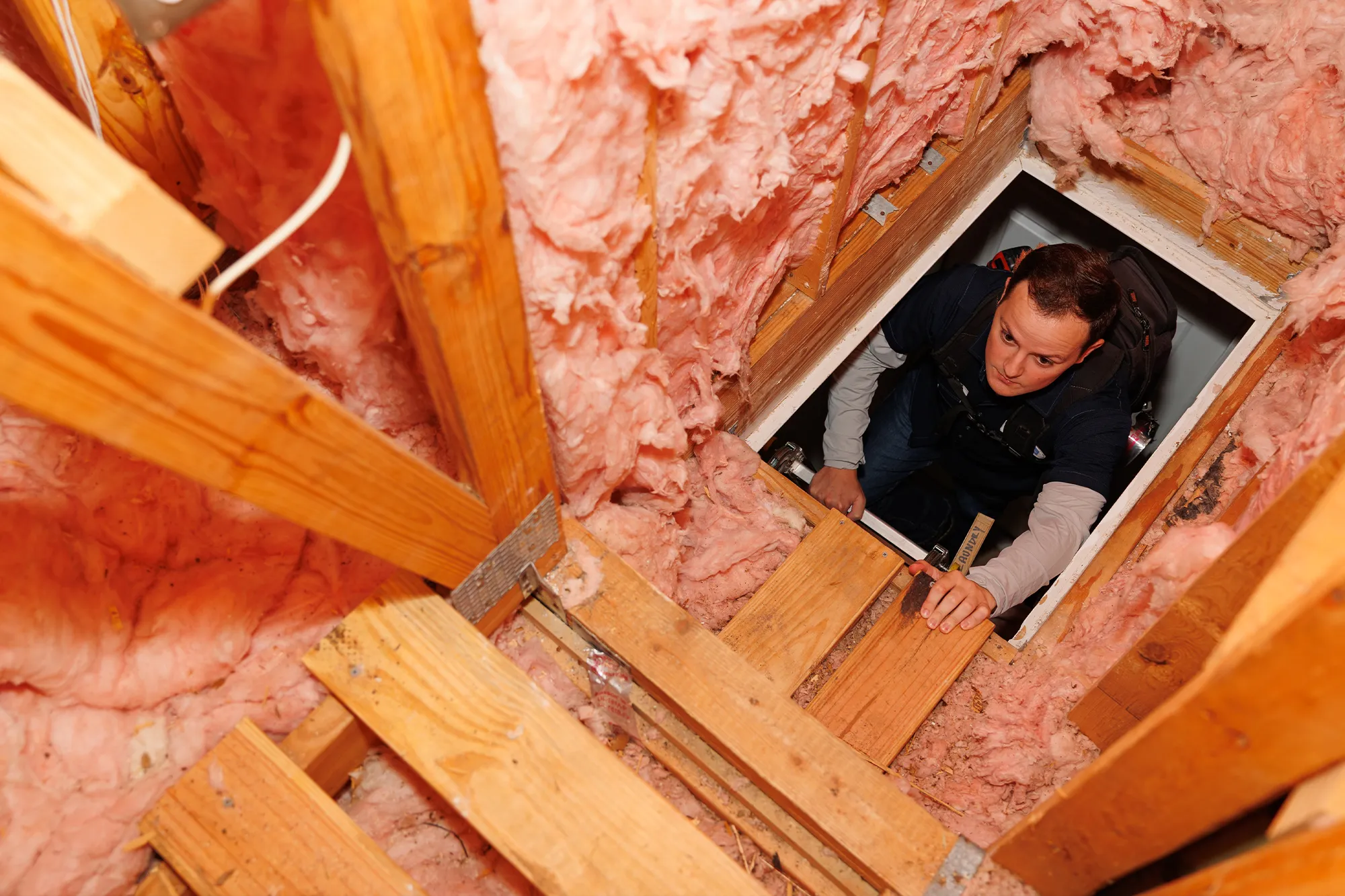
Three Ways Ducts Fall Apart in a Florida Attic
Your attic regularly tops 130 degrees in the summer, and your ducts live there full-time. Here’s what that does to them.
Plenty of homes in Seminole and St. Petersburg still have the original ductwork from the 1970s. After decades of baking in the attic, materials turn brittle, seams split, and insulation breaks down.
Florida’s roof rats love a warm attic, and flexible ductwork is easy to chew through. Once they’re in, they leave holes, nests, and smells that get blown right into your living room.
When ducts are too small for your system, your AC strains to push air through them. That pressure can cause condensation inside the ductwork, which can lead to mold that your family breathes in.
Everything You Wanted to Know About the Ducts You Can’t See
Yes. Over time, dust, debris, and sometimes mold or pest droppings can build up inside your ductwork and get blown right back into your home. Cleaning is worth considering if you notice visible mold or dust puffing out of your vents when the system kicks on.
Here’s the part we always point out, though: if your ducts are leaking, they’ll just fill back up with attic dust. That’s why we check for leaks and damage first, then recommend cleaning, repairs, or both, depending on what your home needs.
It starts by finding the problem, and that means actually getting into the attic. We inspect your ducts for leaks, crushed or kinked runs, or sagging sections, and we measure airflow to see where your system is losing air. From there, the fix depends on what we find.
Our team will reconnect loose joints and secure them properly, seal leaks with mastic and rated foil tape, replace damaged sections, and re-strap any ducts that are sagging. Before we leave, we check the airflow again to make sure the repair actually did its job.
It depends on what we find. Isolated problems like a disconnected joint, a crushed section, or a single chewed line are usually worth repairing. But if your ducts are brittle all over, undersized for your system, or have mold inside them, repairs just delay the inevitable. In situations such as that, we’ll likely recommend a complete duct replacement.
Most duct repairs take a few hours. If we’re reconnecting a joint or sealing a handful of leaks, we’re usually in and out the same morning or afternoon. Bigger jobs, like replacing several damaged runs or fixing problems spread across a large attic, can take most of a day. We’ll give you a realistic estimate after the inspection, so you’re not left guessing.
Almost always, yes. A brand-new AC system connected to leaky or undersized ducts won’t perform the way it should, and you could end up blaming new equipment for an old problem. If you’re thinking about replacing your system, let us check your ductwork first. Sometimes fixing the ducts gets you the comfort you were looking for, and if you still need a new system, it’ll work the way it was designed to.